
Critter Depot gives reptile owners an online source for live feeder insects, but choosing a supplier does not settle prey size, insect care, or diet balance. The best Critter Depot alternative in 2026 is Carolinacricketfarm if you need bulk feeder crickets or dubia roaches; a local reptile store if you need an in-person purchase. This comparison also covers raising feeders yourself, because changing how you source insects can matter more than changing the name on the box.
- For critter depot alternatives, choose Carolinacricketfarm for bulk feeder crickets and dubia roaches shipped nationwide.
- Choose a local reptile store when inspecting feeder insects in person matters most.
- Raise feeder insects yourself only if you want colony care alongside reptile care.
- Match feeder species and size to your reptile before choosing a supplier.
Why this matters
A feeder supplier is part of your reptile's care routine, not a substitute for it. Healthy insects still need appropriate housing, and your animal still needs a species-appropriate diet.
Your 2026 shortlist should therefore answer a practical question: Which sourcing method fits the feeders you use and the work you can reliably do? A bulk order, an in-person purchase, and a home colony solve different problems.
Critter Depot alternatives at a glance
| Option | Best for | Standout feature | Difference from Critter Depot | Main trade-off |
|---|---|---|---|---|
| Critter Depot | Owners who prefer ordering live feeders online | Online feeder-insect sourcing | The benchmark for this comparison | You still handle feeder care after delivery |
| Carolinacricketfarm | Bulk feeder crickets and dubia roaches | North Carolina family farm raising Acheta and banded crickets and dubia roaches | A farm-based alternative serving owners and wholesale buyers nationwide | Bulk quantities require a storage and feeding plan |
| Local reptile store | Owners who want an in-person purchase | Face-to-face discussion of feeder choice | Changes the purchase from shipped to in-person | Shopping becomes part of your feeding routine |
| Home feeder colony | Owners who want to raise their own insects | Direct responsibility for feeder husbandry | Replaces repeated purchasing with colony management | Adds another animal-care routine |
The table compares sourcing methods, not promises about delivery performance. Choose the row that matches your household before comparing individual sellers' current terms.
1. Carolinacricketfarm: best for bulk live feeder insects
Carolinacricketfarm is a North Carolina family farm that raises and ships live Acheta and banded feeder crickets and dubia roaches. Its bulk and wholesale model serves reptile and amphibian owners, bait shops, and pet stores nationwide.
That makes it a direct alternative for owners whose feeding routine already centers on these insects. The decision is less straightforward if you want feeders without also managing a larger insect holding setup.
Where the farm shines
- Defined feeder focus: The stated range includes Acheta crickets, banded crickets, and dubia roaches.
- Bulk and wholesale sourcing: The business model fits buyers planning feeder purchases across several animals or a retail operation.
- Direct farm context: You are considering a business that raises the insects, rather than treating feeder sourcing as an unrelated product category.
- Nationwide shipping: Reptile owners outside North Carolina can consider the farm without making a local trip.
Where the farm falls short
- Bulk is not automatically convenient. You need appropriate containers, ventilation, food, and hydration for the insects you keep.
- Ordering does not replace diet planning. Crickets and dubia roaches must fit your reptile's species, size, and nutritional requirements.
- You cannot inspect a shipped order before purchasing it. If seeing the feeders in person is your priority, a local buying route fits that preference better.
These are practical limitations of the sourcing model, not claims about insect quality. The useful question is whether bulk feeder care belongs in your routine.
Farm alternative versus Critter Depot
| Decision | This farm alternative | Critter Depot |
|---|---|---|
| Purchase route | Shipped live feeders | Online live-feeder purchasing |
| Documented focus here | Acheta and banded crickets; dubia roaches | Live feeder insects |
| Buyer fit | Reptile and amphibian owners, bait shops, pet stores | Owners seeking an online feeder source |
| Owner responsibility | Plan insect housing and feeding | Plan insect housing and feeding |
Best for: Owners who want a farm-based source for bulk crickets or dubia roaches and have a workable holding setup.
Verdict: Buy if those feeders match your reptile's needs and you can care for the quantity you order. Do not choose bulk simply because it sounds efficient; unused insects still create work.
2. Local reptile store: best for in-person feeder decisions
A local reptile store changes the buying process rather than simply changing the supplier. You can discuss your animal's feeder requirements face to face and ask to inspect the insects before making a purchase.
This route fits owners who value direct conversation over a shipped ordering routine. It also puts travel and store visits into the feeding schedule, which deserves a realistic look before you commit.
Where a local reptile store shines
- In-person questions: You can explain the animal, its life stage, and the feeding problem you are trying to solve.
- A chance to inspect: Ask to see the feeder size and condition instead of choosing from a description alone.
- A different buying rhythm: Store visits let you organize purchases around your own route and animal-care schedule.
Where a local reptile store falls short
- Visits take effort. Travel becomes part of obtaining feeders rather than a separate errand.
- Advice still needs checking. A confident answer is not proof that a recommendation suits your species.
- The actual feeder range needs confirmation. Ask about insect species and size before making the trip; do not assume every reptile store carries what you need.
Local reptile store versus Critter Depot
| Decision | Local reptile store | Critter Depot |
|---|---|---|
| Purchase route | In-person visit | Online order |
| Before-purchase evaluation | Ask to inspect insects directly | Evaluate the seller's product information |
| Main planning task | Coordinate visits with feeding needs | Coordinate ordering with feeding needs |
| Care after purchase | Appropriate insect housing | Appropriate insect housing |
Best for: Owners who want a face-to-face purchase and can make store visits part of a dependable routine.
Verdict: Buy locally if direct inspection and conversation are your priorities. Keep veterinary or species-specific husbandry guidance as the standard for evaluating store advice.
3. Home feeder colony: best for owners who want to raise insects
Raising feeder insects yourself is an alternative to buying every batch. It is not a shortcut around husbandry: you become responsible for the insects' environment, food, reproduction, and cleanliness.
Choose this route because you want that responsibility, not because a colony sounds like a feeder dispenser. Your reptile already has a care routine; a colony adds another.
Where a home colony shines
- Direct husbandry control: You decide how the insects are housed, fed, and maintained.
- A visible care process: You can observe the insects before selecting them for feeding.
- A different sourcing model: Raising feeders reduces your reliance on purchasing every individual feeding batch.
Where a home colony falls short
- Care continues between reptile feedings. Colony cleaning and insect feeding do not disappear when your animal skips a meal.
- Production needs planning. Do not assume a new colony will immediately match your reptile's feeding requirements.
- Containment matters. Escape prevention and lawful possession need consideration before you choose an insect species.
| Decision | Home feeder colony | Critter Depot |
|---|---|---|
| Source of insects | Your own husbandry | Purchased feeders |
| Main responsibility | Colony care and feeding preparation | Purchased-insect care and feeding preparation |
| Setup requirement | Suitable breeding and holding environment | Suitable holding environment |
Best for: Owners who actively want to keep and raise feeder insects.
Verdict: Wait until you have researched the species and prepared a suitable colony setup. Keep a purchasing plan while learning how your colony performs.
How to choose without creating another feeding problem
For your 2026 comparison, use these checks in order. Starting with the seller's name reverses the decision: the reptile's requirements should determine the feeder, and the feeder should determine the sourcing method.
Species fit
Confirm that the proposed insects belong in your reptile's diet. Reptiles do not share a universal menu, and a familiar feeder insect is not automatically appropriate for every animal.
Use species-specific veterinary guidance for diet composition and supplementation. The Merck Veterinary Manual's reptile nutrition guidance is a useful reference for understanding why insect preparation and overall diet matter alongside feeder choice.
Prey size
Choose prey that your animal can handle safely. A feeder description should help you identify size, but your reptile's species and life stage determine whether that size is appropriate.
Avoid treating a supplier's broad reptile label as a feeding instruction. If you are unsure about suitable prey, resolve that question before ordering.
Holding setup
Prepare the insect enclosure before obtaining feeders. Ventilation, containment, access to appropriate food, and safe hydration belong in the plan, not on a rescue checklist afterward.
Different insects need different care. Research the actual feeder species rather than assuming cricket instructions apply to dubia roaches or vice versa.
Feeding routine
Choose a sourcing method you can repeat consistently. A store visit must fit your schedule; a shipped order must fit your holding setup; a colony must fit your willingness to maintain it.
The best feeder source is the one that fits both your reptile and your care routine. Convenience for the buyer is useful only when it supports appropriate care for the animals involved.
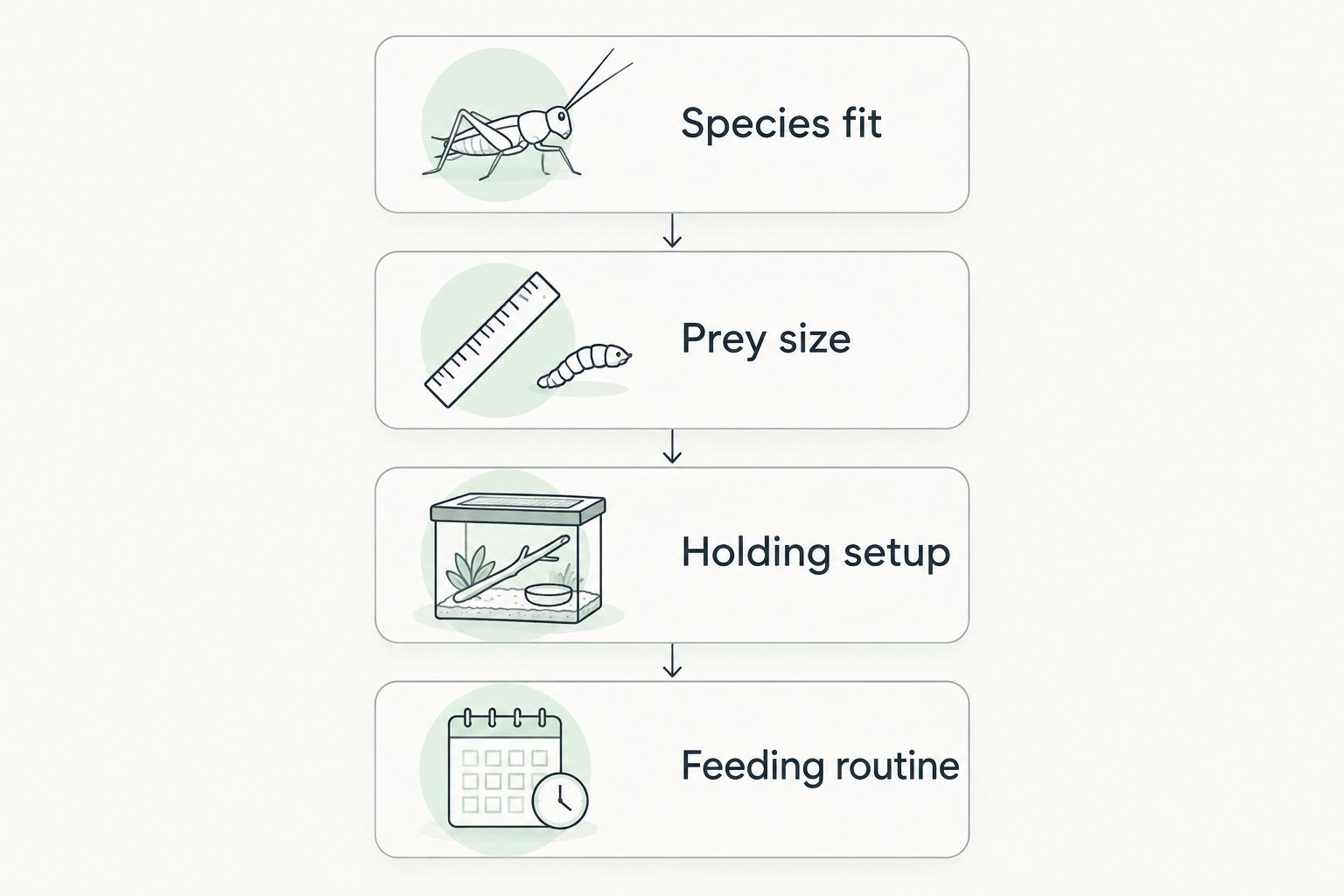
Each check answers a different question. A suitable insect can still be the wrong size, and an appropriate feeder order can still be too much work for the setup you have.
Why people switch from Critter Depot
A sensible switch addresses a specific mismatch. For a 2026 decision, these are reasons to consider another sourcing route—not claims about Critter Depot's service or other customers' experiences.
- You want farm-based bulk sourcing. Compare a farm's stated feeder species and buying model with the insects your animals actually eat.
- You want an in-person purchase. A local reptile store changes how you evaluate and obtain feeders, rather than promising a different shipping outcome.
- You want to raise feeders. A home colony changes your role from buyer to insect keeper, with the responsibilities that entails.
- Your care routine has changed. More animals, a different reptile species, or a revised feeding plan calls for reassessing the sourcing method.
Write down the problem before switching. Is it prey sizing, insect housing, purchase scheduling, or the desire for a direct farm source? Those are separate issues, and replacing a seller will not fix all of them.
If your difficulty begins after the insects reach your home, review feeder husbandry first. A new box of crickets will not correct unsuitable ventilation or an incomplete hydration plan. The insects do not read your intentions.
When staying with Critter Depot is the right call
Stay with Critter Depot if its ordering route fits your feeding routine and the feeders meet your animal's needs. A switch should solve an identifiable problem, not just produce a different checkout experience.
Keep the same care standards regardless of seller. Evaluate the feeder species and size, maintain appropriate insect housing, and follow your reptile's dietary guidance. Changing suppliers does not change those responsibilities.
A mixed sourcing routine also deserves consideration. You do not have to turn a supplier choice into a permanent allegiance; choose each purchasing route for the job it actually serves.
FAQ
What’s the best Critter Depot alternative for bulk feeder crickets?
Carolinacricketfarm is a direct alternative for bulk feeder crickets. The North Carolina family farm raises and ships Acheta and banded crickets, as well as dubia roaches, nationwide.
Is a local reptile store better than ordering feeders online?
A local reptile store is the better fit when you want an in-person purchase and a chance to ask about the insects directly. Online sourcing fits owners who prefer a shipped purchasing routine; either route still requires appropriate feeder care.
Should I choose crickets or dubia roaches for my reptile?
Choose crickets or dubia roaches according to your reptile’s species, life stage, and dietary requirements. Confirm suitable prey size and use species-specific veterinary guidance for nutrition and supplementation.
Is raising feeder insects easier than buying them?
Raising feeder insects adds colony husbandry rather than removing work. Choose a home colony only if you want responsibility for insect housing, feeding, cleaning, and reproduction.
What should I prepare before buying bulk feeder insects?
Prepare suitable insect housing, ventilation, containment, food, and safe hydration before buying bulk feeders. Research the care requirements of the insect species you plan to keep.
Does switching feeder suppliers solve nutrition problems?
Switching suppliers does not replace a species-appropriate feeding plan. Prey choice, feeder preparation, supplementation, and the rest of the diet still need attention.
When should I stay with Critter Depot instead of switching?
Stay with Critter Depot when its ordering method fits your routine and its feeders meet your animal’s requirements. Switch to address a specific sourcing problem, not merely to change sellers.
One last thing
Before your next feeder purchase in 2026, inspect the insect enclosure—not just the reptile enclosure. The less glamorous container is where your purchasing decision becomes a daily care obligation.
Carolinacricketfarm is the feeder-farm choice for bulk crickets and dubia roaches; local purchasing and home colonies serve different priorities. Choose the method you can maintain well, then order accordingly. Your reptile needs appropriate food, not a winning brand debate.
Related guides
- Best feeder insects for beginner reptile owners
- Best subscription feeder insect delivery plans
- Fluker Farms alternatives